Practicing History, Not Just Referencing It

Reflections from Kitani Kreatif’s Cultural Creators Lab
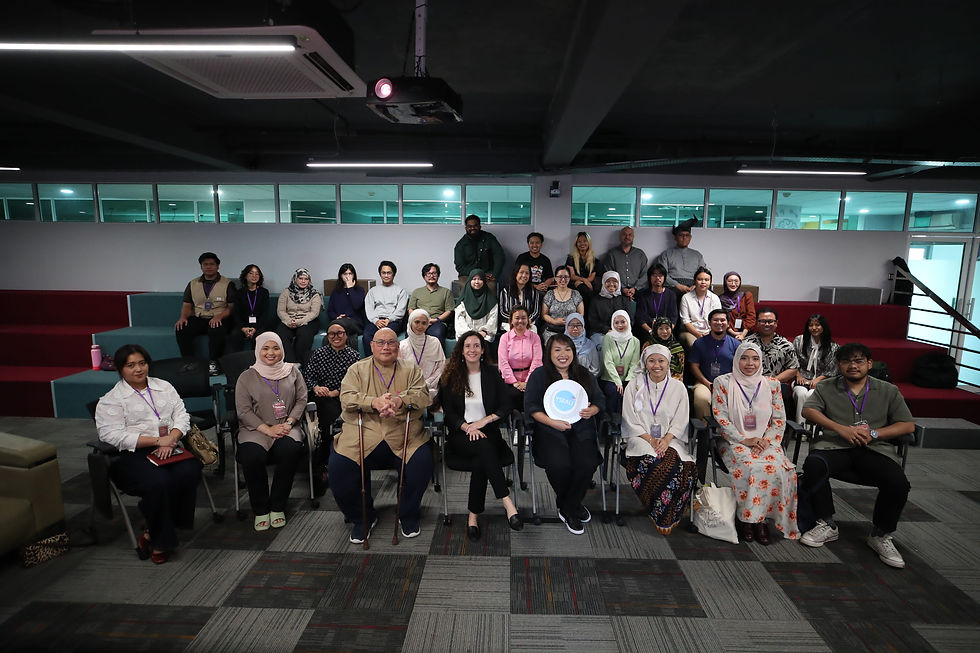
Last weekend, our friends at Kitani Kreatif hosted The Cultural Creators Lab at Brunei Innovation Lab, gathering creatives, cultural producers, and business owners for two days of dialogue and development.
On Day 1, our Business Developer, Nuur Batrisyia Ali, took part in Development Clinic #1 themed “Researching Bruneian History and Using It as a Resource.” She joined Dr Rozan Yunos, with Joshua Belayan as discussant — bringing together a social historian, a cultural practitioner, and a youth perspective shaped by academic training and strategic practice.
What unfolded was not a lecture, but a layered conversation about history, interpretation, and responsibility.
History Happened — But Our Understanding Evolves
For Nuur Batrisyia Ali, research begins with curiosity. It is not about collecting facts to decorate an idea, but about asking why and being willing to unlearn what we thought we knew.
Bruneian history often feels mysterious. It exists, but is not always deeply explored beyond surface narratives. And when it is explored, perspectives differ whether they’re shaped by academic study, family storytelling, community memory, and evolving scholarship.
As Imamull Qhaeer reflected from the audience, history happened — but as new discoveries surface, the version of history we know can change. There are different ways of gathering data. Even the degree of truth can be measured and debated.
Amal Osmera’s takeaway added another dimension: history is not just rigid facts. It is also emotion. The way we learn history shapes how we understand it. School textbooks and community stories may overlap in facts, but they differ in feeling, and feeling shapes how history is remembered.
History, then, is fixed in time. But our interpretation of it is not.
Respect, Interpretation, and Creative Responsibility
One of the most important tensions discussed was the balance between accuracy and respect.
There is a common misconception that to be respectful, creative work must be academically perfect. In reality, creative interpretation is not the issue, however, misrepresentation is. Transparency matters. Knowing where interpretation begins, and being honest about it, is part of responsible storytelling.
Nuur Batrisyia Ali referenced how shows like Bridgerton reimagine historical settings while being clear about their fictional lens. The creative twist is not inherently disrespectful. What matters is context, empathy, and clarity.
As Imamull Qhaeer summarised later:
We can add a creative twist when the goal is to show creativity. We can stick to the facts if the focus is to preserve.
That distinction is crucial for agencies, creatives, and businesses working with cultural material. Not every project requires academic rigidity — but every project requires intention.
Dialogue, Not Dominance
Sharing the panel revealed something else: interdisciplinary conversations work best when no one tries to dominate the narrative.
Interestingly, Dr Rozan Yunos identifies as a social historian rather than a formal academic historian, though his strong public presence often leads people to assume otherwise. That nuance shifted the dynamic. Nuur Batrisyia Ali found herself contributing from an academic-trained perspective, while Joshua Belayan brought in practitioner insight.

From the audience, what stood out was growth.
Imamull Qhaeer noted how different she felt compared to when she first joined AICREATIVV as an intern; now being able to carry herself with clarity and confidence, contributing perspectives rather than simply asking questions.
Amal Osmera observed something equally important: she listened well. Even with her own opinions, she allowed space for opposing views, keeping the conversation respectful and flowing.
It was not about winning arguments. It was about sharpening thinking.
Research Is Strategy
For us at AICREATIVV, conversations like this are not abstract.
Amal Osmera’s reflection was direct:
No research = no strategy = blind work.
The more context we have, the better choices we make. Relying only on personal opinion keeps us in a bubble. Understanding cultural nuance, historical layers, and emotional context strengthens creative and business decisions.
Cultural research cannot exist in isolation. It must translate into strategy, storytelling, and sustainable relevance.
History is not a decorative reference. It is a resource especially when approached with responsibility.
Learning, Unlearning, and Moving Forward

On a personal note, this first public panel reshaped Nuur Batrisyia Ali’s own direction. It sparked a renewed interest in pursuing history more academically. It also revealed something simpler: the desire to communicate more clearly, more professionally, using fewer fillers, sharper delivery (fighting!)
But more importantly, the hope is that participants walked away with a new way of thinking about history — not as something distant, but as something we live within and alongside.
And yes — if this conversation nudges you even slightly, go visit Pusat Sejarah. Stop by Dewan Bahasa. Support local history publishers like Nolly books or Qasrun Nafis. History is not hidden, it just requires initiative.
The Cultural Creators Lab reminded us that culture is not static. It is practiced, interpreted, questioned, and carried forward responsibly.
And that responsibility belongs to all of us.


Comments